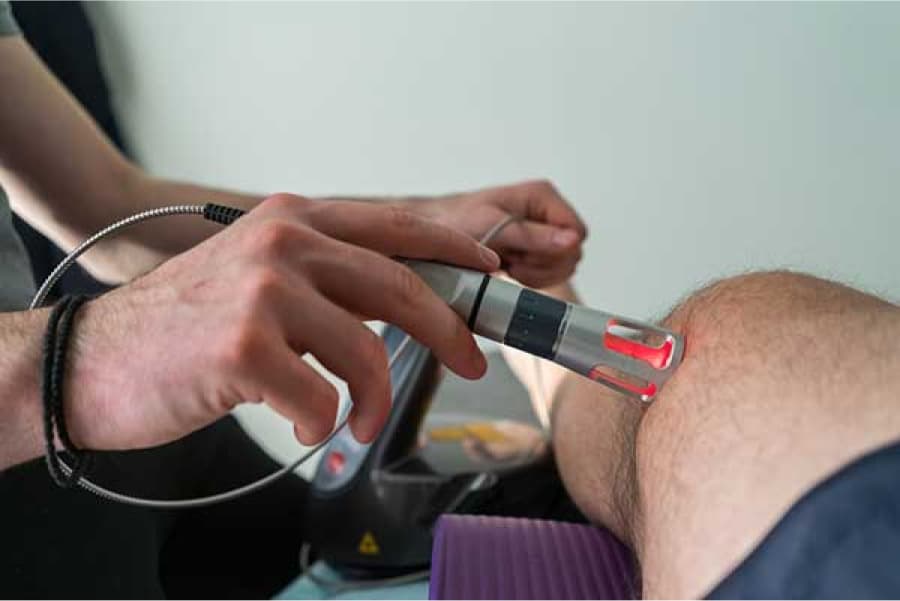
Class IV therapeutic lasers can reduce pain, reduce muscle spasms, increase circulation, and promote healing by utilizing light energy (photons) to penetrate deep into tissues. The mechanism of action can be described as follows:
- Pain reduction: The laser energy stimulates the production of endorphins, the body’s natural pain-relieving substances, which can help to reduce pain and discomfort.
- Muscle spasm reduction: The laser energy can also help to reduce muscle spasms by increasing circulation and reducing inflammation, which can cause spasms.
- Increased circulation: The laser energy increases circulation to the affected area, delivering oxygen and nutrients to injured tissues and promoting the healing process.
- Wound healing: The laser energy promotes wound healing by stimulating cellular processes, such as cell division and protein synthesis, which are necessary for tissue repair.
- Anti-inflammatory effect: The laser energy also has an anti-inflammatory effect, which can help to reduce inflammation and swelling, and improve the overall healing process.
References
A systematic review published in the Journal of Pain Research found that Class IV laser therapy was effective in reducing pain, improving function, and promoting healing in patients with musculoskeletal conditions such as osteoarthritis, low back pain, and rotator cuff tendinitis.
A study published in the Journal of Physical Therapy Science found that Class IV laser therapy was effective in reducing pain, improving range of motion, and reducing muscle spasms in patients with shoulder pain.
A study published in the American Journal of Sports Medicine found that Class IV laser therapy was effective in reducing pain, improving function, and promoting healing in athletes with acute and chronic musculoskeletal injuries.
A study published in the Journal of Rehabilitation Research and Development found that Class IV laser therapy was effective in reducing pain, improving function, and promoting healing in patients with knee osteoarthritis.