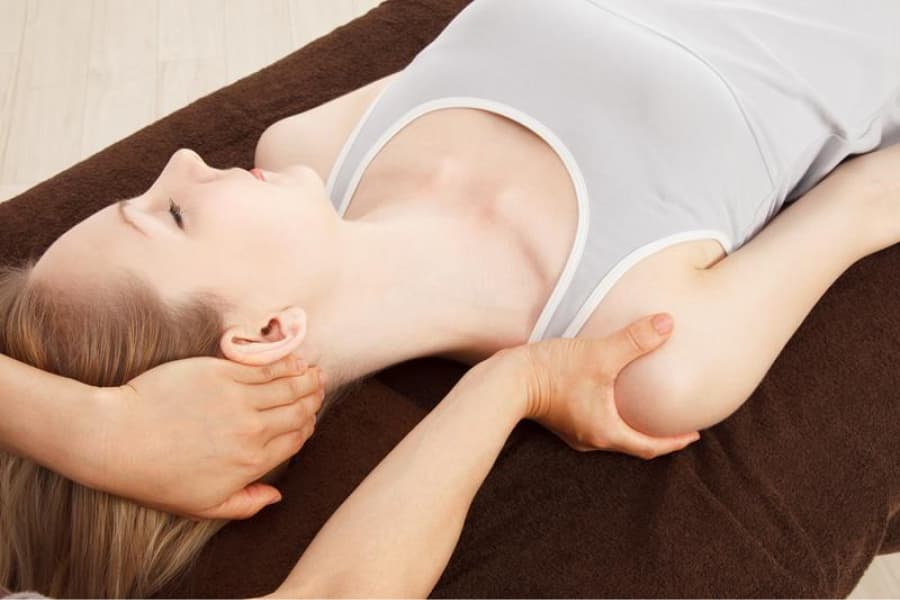
The Pin and Stretch Technique is a manual therapy intervention that involves the application of pressure (pinning) to a specific muscle, followed by stretching of that muscle. The technique is commonly used to help patients with musculoskeletal conditions, including tight or painful muscles, joint restrictions, and imbalances in muscle tone. The pinning component of the technique works by applying pressure to the muscle, which helps to reduce tension and spasm. This can help to relieve pain and improve mobility in the affected area. The stretching component then helps to elongate the muscle, which can improve flexibility and range of motion. The Pin and Stretch Technique is often used in conjunction with other manual therapy interventions, such as massage or joint mobilization, to provide a comprehensive approach to treating musculoskeletal conditions. It is also commonly used in conjunction with exercises and other rehabilitation techniques to help patients recover from injury and improve overall function. The Pin and Stretch Technique helps injuries by:
- Reducing muscle tension and spasm: By applying pressure to the affected muscle, the Pin and Stretch Technique helps to reduce tension and spasm, which can relieve pain and improve mobility in the affected area.
- Improving flexibility and range of motion: The stretching component of the Pin and Stretch Technique helps to elongate the muscle, which can improve flexibility and range of motion in the affected area.
- Targeting specific muscles: The Pin and Stretch Technique allows the healthcare provider to target specific muscles that may be contributing to pain or movement restrictions, which can help to improve overall function and prevent further injury.
- Complementing other interventions: The Pin and Stretch Technique is often used in conjunction with other manual therapy interventions, such as massage or joint mobilization, to provide a comprehensive approach to treating musculoskeletal conditions.
- Facilitating rehabilitation: The Pin and Stretch Technique is also commonly used in conjunction with exercises and other rehabilitation techniques to help patients recover from injury and improve overall function.
References
- A 2008 study published in the Journal of Orthopaedic & Sports Physical Therapy found that ART was effective for reducing pain and improving function in patients with upper extremity conditions.
- A 2014 systematic review published in the Journal of Manipulative and Physiological Therapeutics concluded that ART appears to be effective for treating a variety of conditions, including neck pain, low back pain, and carpal tunnel syndrome.
- A 2018 randomized controlled trial published in the Journal of Athletic Training found that ART was effective for reducing pain and improving function in patients with knee osteoarthritis